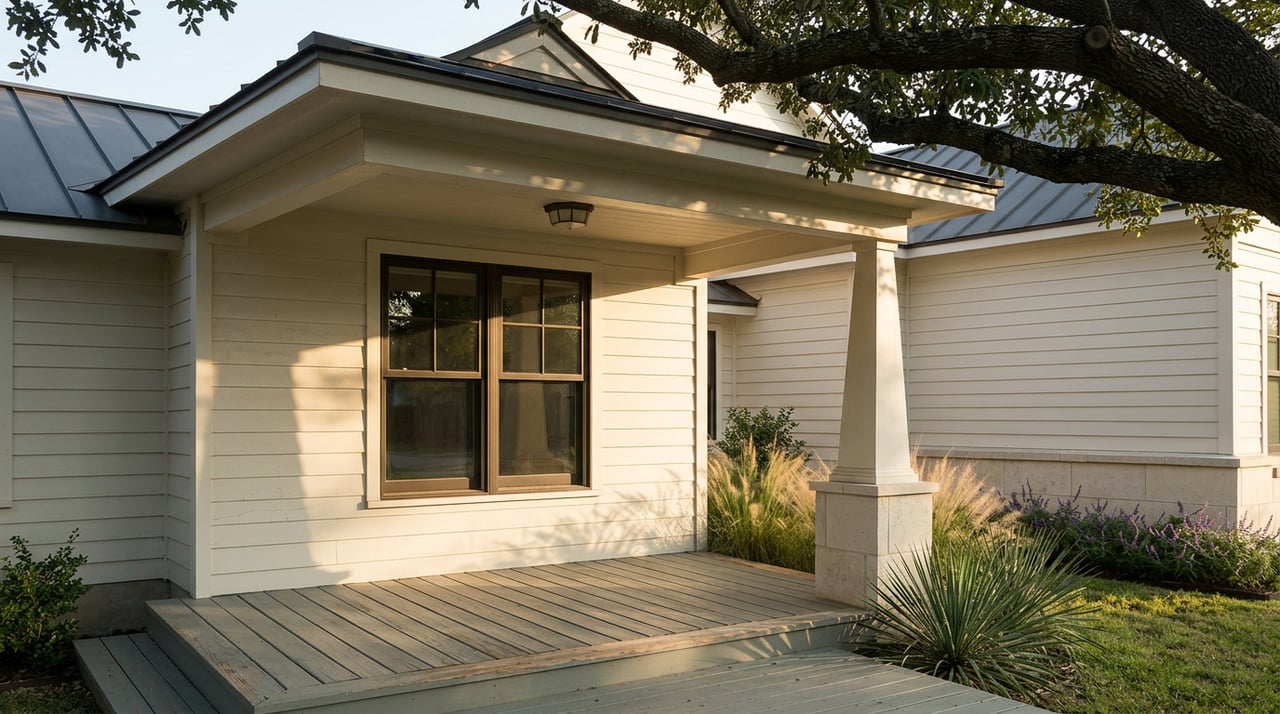
A buyer falls for a 1919 bungalow in Fairmount. The inspection turns up a few items a lender wants fixed before funding: a section of siding, an exterior door out of true, maybe a metal roof swap the seller already promised. Thirty days to close feels generous. Then someone mentions the house sits inside a locally designated historic district, and every one of those repairs needs a Certificate of Appropriateness before a contractor can touch the exterior. The lender wants the work done first. The city won't let the work start until its commission reviews it, and that commission meets once a month.
That collision, not the price tag, is the real gatekeeper in Fort Worth's historic neighborhoods. If you're shopping in Fairmount, Ryan Place, Mistletoe Heights, Berkeley Place, or the Stockyards, the house you can afford and the timeline you can actually execute are two different questions, and only one of them shows up on a listing sheet.
What actually requires a Certificate of Appropriateness
Fort Worth's Historic and Cultural Landmarks Commission, running since 1981, oversees exterior work on any property inside a locally designated historic district or carrying an individual HC or HSE landmark designation. The list of what counts as exterior work is longer than most buyers expect: walls, roofs, siding, windows, exterior doors, fences, porches and porch columns, driveways, walkways, decks, painting masonry, even foundations. In Fairmount/Southside specifically, the design guidelines single out metal roofing by name. Swap a composition shingle roof for standing-seam metal, a popular upgrade elsewhere in Fort Worth, and you need a COA first.
A National Register listing by itself doesn't trigger any of this. Elizabeth Boulevard joined the National Register of Historic Places in 1979, which the Ryan Place Improvement Association still calls the neighborhood's original residential historic designation. What actually requires a COA is your address sitting inside one of the city's eight locally designated historic districts, and Ryan Place carries both the National Register listing and the local overlay. That distinction matters because buyers sometimes assume National Register status is purely honorary everywhere. In Ryan Place it isn't. The exterior review requirement is real and it runs through the same city commission as Fairmount and Berkeley Place.
The calendar problem, in actual weeks
Here's where the sequencing gets specific. COA applications are due the third Monday of the month. Hearings happen the second Monday of the following month. A straightforward, complete application is looking at roughly four to five weeks between filing and a decision, assuming nothing gets tabled for revisions. Demolition of a contributing structure is a different animal entirely: that can trigger a delay of up to 180 days while the commission assesses historic significance.
Now overlay that on a typical financed purchase. Most lenders won't fund a loan until repairs they've flagged are complete. If those repairs need HCLC sign-off first, the file stalls in a loop no one designed on purpose: the bank won't release funds until the work is done, the work can't legally start until the commission approves it, and the commission isn't meeting again for weeks. A 30-day close becomes a 60 or 90-day close, if it closes at all. This is the specific reason the buyer pool for historic-district homes needing repairs is smaller than the neighborhood's reputation would suggest. It isn't that fewer people want a Craftsman on College Avenue. It's that fewer buyers can absorb a financing timeline that depends on a monthly civic calendar.
What the July 2026 numbers are actually telling you
Fairmount homes carried a median list price of $524,000 in July 2026, with a median of 41 days on market and price per square foot down 5% compared to July 2025. Read on its own, that dip looks like softening demand. Read against the approval calendar, it looks more like a calendar discount. Buyers who don't want to manage a monthly commission cycle price that risk into their offer. Buyers who plan to live in the house as is, or who've already built the approval lead time into their renovation schedule, don't apply the same discount, and they're often the ones who close.
That's a genuinely different way to read the number than the portals present it. The price isn't just measuring the house. It's measuring how much of the buyer pool self-selected out before ever writing an offer.
The reward side of the same process
The commission that slows your renovation is the same body that can freeze your tax bill for a decade or more. Fort Worth's Historic Site Tax Exemption locks the city's portion of your property taxes at the pre-improvement value for up to 10 years on an HC-designated property and up to 15 years on an HSE property, provided you spend at least 20% of the assessed improvement value on qualifying rehabilitation. Layer that with the Texas Historic Preservation Tax Credit, a state program worth 25% of eligible rehabilitation costs on National Register properties, and the same approval process that felt like friction during the purchase becomes a real financial mechanism once you own the house and start the work.
Ryan Place has living proof that the long version of this process pays off. The Drake home on Ryan Place Drive, a Wiley Clarkson design built in 1917 for John Ryan himself, has appeared on the neighborhood's Candlelight Christmas home tour three times, most recently after its owners completed a major renovation that opened up the first floor and enlarged the kitchen. Susan Drake did much of the interior work herself.
"I painted every room in the house. There was a lot of white."
That's what patience through a review process looks like on the other side: a house built the year the United States entered World War I, still standing, still on the tour, now with a kitchen that works for the family living in it.
A quick district reference
| Historic district | Requires a Certificate of Appropriateness | One thing worth knowing |
|---|---|---|
| Fairmount/Southside | Yes | Listed on the National Register in April 1990; the largest contributing-structure count of any Fort Worth historic district |
| Ryan Place | Yes | Elizabeth Boulevard joined the National Register in 1979, the neighborhood's founding historic designation |
| Mistletoe Heights | Yes | Assigned historically significant status by the city in 2002 |
| Berkeley Place | Yes | Locally designated district known for its curved block and plaster house forms |
| Fort Worth Stockyards | Yes | Locally designated district anchored by the historic stockyards corridor |
Every district on this list runs through the same commission, the same monthly cycle, and the same COA requirement. The differences between them are architectural and historical, not procedural.
Turning this into a plan before you write an offer
If you're touring homes in any of these districts, the questions worth asking before you fall for a house are different from the ones you'd ask elsewhere. Is the exterior work your inspector flags the kind that needs a COA, or is it interior only? If it needs a COA, can your closing timeline absorb a four to five week review cycle, or longer if the application needs revisions? Does your lender's repair condition assume work can start immediately, and have they been told it can't? And on the reward side, does the property qualify for the Historic Site Tax Exemption or the state tax credit, and is that worth building into your offer as long-term value rather than a line item you discover later?
None of this makes historic-district ownership a harder decision than it should be. It makes it a different one, with its own calendar, its own paperwork, and its own payoff for the buyer who plans around it instead of getting surprised by it.
A few questions worth answering directly
Does a National Register listing by itself mean I need city approval for exterior work? No. National Register status is honorary. What requires a COA is falling inside one of Fort Worth's locally designated historic districts, which is a separate city overlay. Some properties, like those on Elizabeth Boulevard, carry both.
Can I still get a conventional mortgage on a historic-district home that needs repairs? Often, yes, but the timing matters more than the loan type. Talk to your lender early about whether their repair conditions can flex around a COA review cycle, since the commission only hears applications once a month.
How long does the full cycle from application to approved work actually take? For a complete, straightforward application, plan on roughly four to five weeks between the filing deadline and the commission's decision. Demolition of a contributing structure runs on a separate track that can extend up to 180 days.
What's the actual value of the tax incentives if I do the work the right way? An HC designation freezes the city's portion of your property taxes at the pre-improvement value for up to 10 years, HSE for up to 15, provided at least 20% of the assessed improvement value goes into qualifying rehabilitation. The state's separate 25% tax credit applies to eligible rehab costs on National Register properties.
Buying in one of Fort Worth's historic districts rewards the kind of patience that comes from having done it before. Chan restored her own 1952 midcentury ranch down to the systems, so the sequencing questions in this piece aren't theoretical for our team. If you're weighing a Fairmount bungalow or a house on Elizabeth Boulevard against the calendar it actually runs on, Simms Frontier Real Estate can walk the timeline with you before you write the offer, not after.