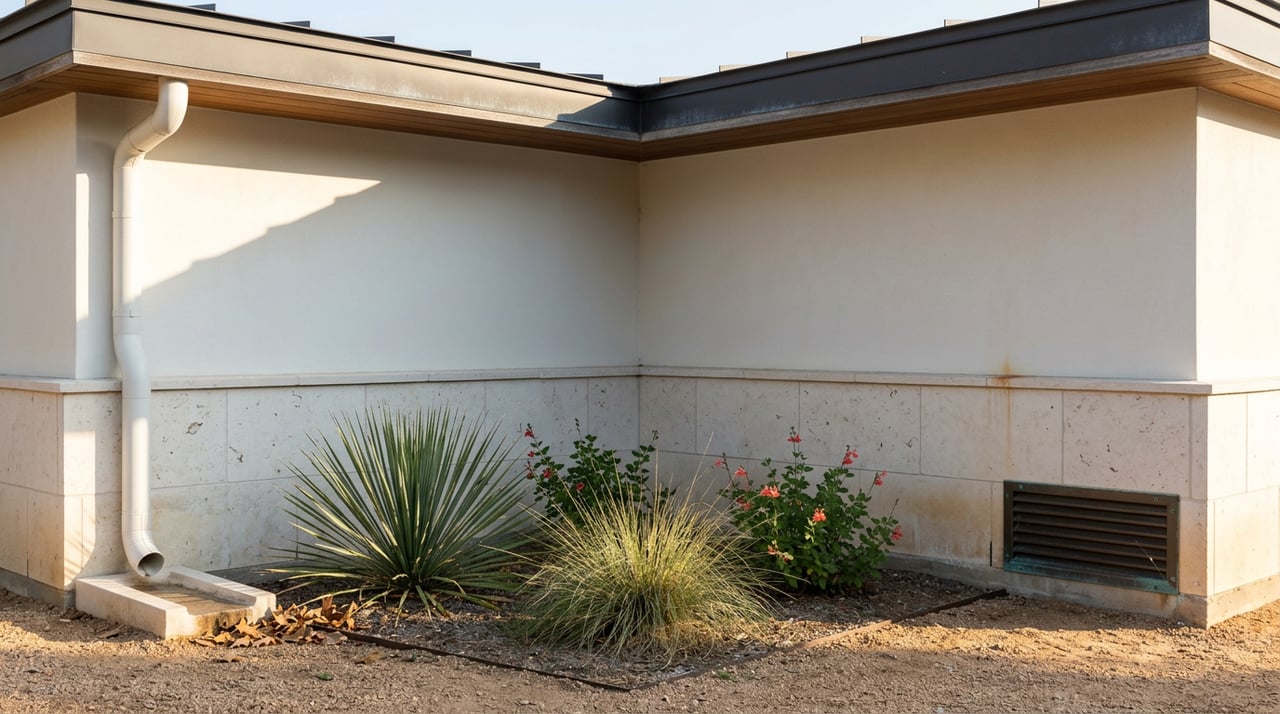
An Austin home inspection report reads the same whether the house sits in Mueller or in Tarrytown. Same format, same checklist, same photos of the attic insulation. What that report is worth at the negotiating table does not read the same at all, and the difference has nothing to do with the seller's asking price. It has to do with which side of Interstate 35 the foundation is sitting on.
That single geological fact, more than the median price headline or the days-on-market number, is the piece of this market most buyers and even some agents underweight in 2026. Here is why it matters more this year than it has in a while.
The Market Finally Handed Buyers Real Leverage
For most of the pandemic years, an Austin inspection report was closer to a formality than a negotiating tool. Buyers waived option periods to compete. Sellers had no reason to entertain a repair credit when three other offers were waiting behind the one on the table.
That dynamic has reversed. As of August 13, 2026, the Austin-area MLS carried 17,495 active residential listings against 4,073 pending, with months of inventory sitting at 5.9, a level that puts the market in balanced-to-buyer territory rather than the seller's-market conditions of 2021 and 2022. Properties were spending an average of 68 days on market, and more than 55 percent of active listings had already taken at least one price cut. The median sold price came in at $407,000, well below the market's May 2022 peak.
The practical effect for anyone under contract right now is that sellers can no longer treat a repair request as background noise. Documented repair credits tied to inspection findings commonly land in the $5,000 to $25,000 range in current transactions, and a seller sitting on 68 days of market exposure has real reason to negotiate rather than start the clock over with a new buyer.
Why the Same Crack Means Something Different Depending on the Address
Here is the part that rarely makes it into a general inspection explainer. Austin is not one soil profile. I-35 functions as a rough dividing line between two different geologic realities, and the Balcones Fault system, which runs roughly parallel to MoPac on the west side of the city, is the reason.
West of that line, the city sits on the Edwards Plateau, where shallow limestone bedrock lies under thin layers of clay and caliche. East of it, the ground is Blackland Prairie, a deep bed of expansive clay with a plasticity index that often exceeds 40, meaning the soil can change volume by as much as 15 percent between its driest and most saturated states. That shrink-swell cycle, driven by Austin's pattern of hot, dry summers followed by heavy rain, is the primary driver of foundation movement in Central Texas.
A quick way to see how this plays out by neighborhood:
| West of I-35 | Transition zone | East of I-35 |
|---|---|---|
| Tarrytown, Allandale, West Lake Hills, Rollingwood | Zilker, Barton Hills, South Lamar | East Austin, Mueller, Windsor Park, Pflugerville, Manor |
| Edwards Plateau limestone, shallow soil over bedrock | Clay and limestone can alternate within a single lot | Blackland Prairie clay, high plasticity, deep active zone |
| Common inspector flags: retaining walls, cut-and-fill settlement, drainage on hillside lots | Findings vary block to block, sometimes corner to corner | Common inspector flags: slab cracking, differential movement after drought-rain cycles |
Estimates on how many Austin homes eventually show measurable foundation movement vary by source, ranging from roughly one in three within the first two decades to considerably higher lifetime rates concentrated on the clay side of town. The honest takeaway is not a single scary percentage. It is that the same sticking door or hairline crack means something different depending on whether the house is anchored into rock or riding on clay that has been through several drought-rain cycles already.
Mature live oaks complicate the picture further on both sides of the line. Large trees within 15 to 20 feet of a foundation draw substantial moisture from the surrounding soil, which can dry and shrink clay unevenly beneath one corner of a slab while the rest stays stable. That is one reason two houses on the same block can generate very different inspection reports.
What This Means Inside the Option Period
Texas gives buyers a genuinely useful tool here: the option period. In Austin's current market, that window typically runs 7 to 10 days, secured by an option fee usually between $100 and $500. During that stretch, a buyer can walk for any reason and keep their earnest money, forfeiting only the option fee.
A standard general inspection in Austin typically runs a few hundred dollars, often in the $300 to $600 range depending on square footage, and it will flag visible signs of foundation trouble such as sticking doors, diagonal cracks at window corners, or stair-step cracking in brick. What it will not do is give you a full structural assessment. If those signs show up, or if the house sits on the east side of the divide and is more than a couple of decades old, the next move is a dedicated foundation inspection or a licensed structural engineer, usually an additional $150 to $400. Most lenders also require a separate wood-destroying insect report, typically $75 to $125, since Austin sits in a high-risk termite zone.
The estimate that comes back from a structural engineer becomes the actual negotiating document, not the general inspector's checklist. It is also worth remembering that homeowner's insurance in Austin, which commonly runs $2,400 to $5,000 a year, does not cover foundation repair caused by soil movement. That cost sits entirely outside the policy, which is one more reason to settle it during the option period rather than after closing.
The Disclosure Form Got Longer This Year
Buyers negotiating repairs used to be doing detective work the seller had no obligation to make easier. That changed on July 1, 2026, when updated Texas Real Estate Commission disclosure requirements became mandatory statewide. Sellers must now disclose whether they have been unable to obtain homeowners insurance for the property, along with information on private road maintenance obligations, above-ground storage tanks over 500 gallons, and any conservation easements attached to the deed. A companion water rights form now requires sellers to state what they know about groundwater and surface water rights, a detail that matters most for Hill Country properties inside the Barton Springs/Edwards Aquifer Conservation District, the Hays Trinity Groundwater Conservation District, or the Southwestern Travis County Groundwater Conservation District.
None of this replaces the inspection. Texas Property Code Section 5.008 already required sellers to disclose known foundation repairs, and that obligation has not changed. What has changed is how much a buyer can learn before ever writing an offer, which shifts a slice of the negotiation earlier in the process. A disclosure that already states "foundation repaired in 2019" or flags a documented insurance claim gives a buyer a data point to price into the offer itself, rather than a surprise to negotiate around three weeks later.
Turning This Into a Plan
For buyers:
- Know which side of I-35 the lot sits on before you write the offer, and treat a west-side hillside lot and an east-side slab home as different inspection problems, not the same checklist.
- Read the seller's disclosure closely before the option period starts. The new categories exist so you do not have to discover them mid-transaction.
- If the general inspector flags movement, cracking, or drainage concerns, schedule the structural engineer immediately. The option period clock does not pause.
- Budget separately for insurance. It will not absorb a foundation claim.
For sellers:
- A foundation repaired years ago with documentation, contractor name and date attached, tends to generate less friction than a vague mention or a blank field.
- If your home sits east of I-35 and is older than 20 or 30 years, a pre-listing structural opinion can put you in control of the repair narrative before a buyer's engineer does.
- Price with the current 68-day average and the 55-plus percent price-cut rate in mind. A well-priced home still moves. An overpriced one gives a buyer's inspector more time to build a case.
A Few Questions Worth Answering Directly
Does foundation movement automatically end a deal? No. Movement is common enough in Central Texas that most buyers and agents treat documented, quantified movement as a negotiating item rather than an automatic walk-away, provided there is a real repair estimate behind it.
Is the option fee refundable if I terminate? No. The earnest money comes back to you if you terminate within the option period, but the option fee itself is the seller's compensation for taking the home off the market during your review window.
Do I need a structural engineer even if the general inspector says nothing looks wrong? Not automatically. Most buyers start with a general inspection and only bring in a specialist if that report shows movement, unevenness, or drainage concerns worth a closer look.
Austin's market gave buyers real time and real leverage again in 2026. Using it well means understanding what the ground under a specific address is actually doing, not just what the report says on page one.
If you are weighing an offer, a listing, or just want a second opinion on what an inspection report actually means for your negotiating position, Simms Frontier Real Estate is glad to walk through it with you. Work With Us.